Hāloa:
The Story of the Hawaiian People
My moʻolelo (story) begins way before my time.
Oral traditions passed on through chants, legends, myths and genealogies, trace the origins of the Native Hawaiian people to early Polynesian planters, fishers, healers, artists, engineers, priests, astronomers, and navigators and beyond them to the life forces of the land itself.
According to these genealogies, Native Hawaiians are the living descendants of Papa, the Earth Mother, and Wākea, the Sky Father. Papa was born in darkness and Wākea was created in the light. Their union, symbolizing male light’s penetration into female’s darkness, brought forth the birth of the Hawaiian islands and the Hawaiian people.
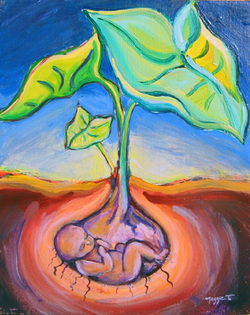
Papa and Wākea had a daughter named Hoʻohōkūkalani, whose name means ʻthe making of stars in the heavens’. Wākea and Hoʻohōkūkalani together conceived a child. Their union resulted in two births. The first birth was an unformed fetus, who was born prematurely. This child, a son, was named Hāloa. The kupuna (elders) whispered ʻthe child looks like a root’. The family then wrapped Hāloa in kapa (cloth) and buried him in the ʻāina (land).Hoʻohōkūkalani grieved the loss of her son, wailing, mourning and watering the grave with her tears. In time a plant grew from the gravesite, a kalo plant (taro plant). This plant was fragile and tender but also strong and healthy. The stems were slender and when the wind blew its heart shaped leaves swayed. In the center of each leaf, water gathered like a mother’s tear drop.
Hoʻohōkūkalani conceived again and this time gave birth to another son also named Hāloa in honor of his elder brother. Hāloa was born strong and healthy and is believed to be the first Hawaiian man. Thus, Hāloa the kalo, is considered to be the older sibling and the kanaka Hawai`i (Hawaiian people) the younger sibling. It is said that if you take care of your older siblings and your mother, they will nurture and take care of you. This is the relationship that the Hawaiian people have to kalo. The myth of Hāloa has been passed down from generation to generation. The word Hāloa itself means long breath and infers to the strength and endurance of the Hawaiian people. Without breath we have no voice; without breath we have no life. Hāloa tells a story of the interconnectedness between Hawaiians and the connection between people and nature.
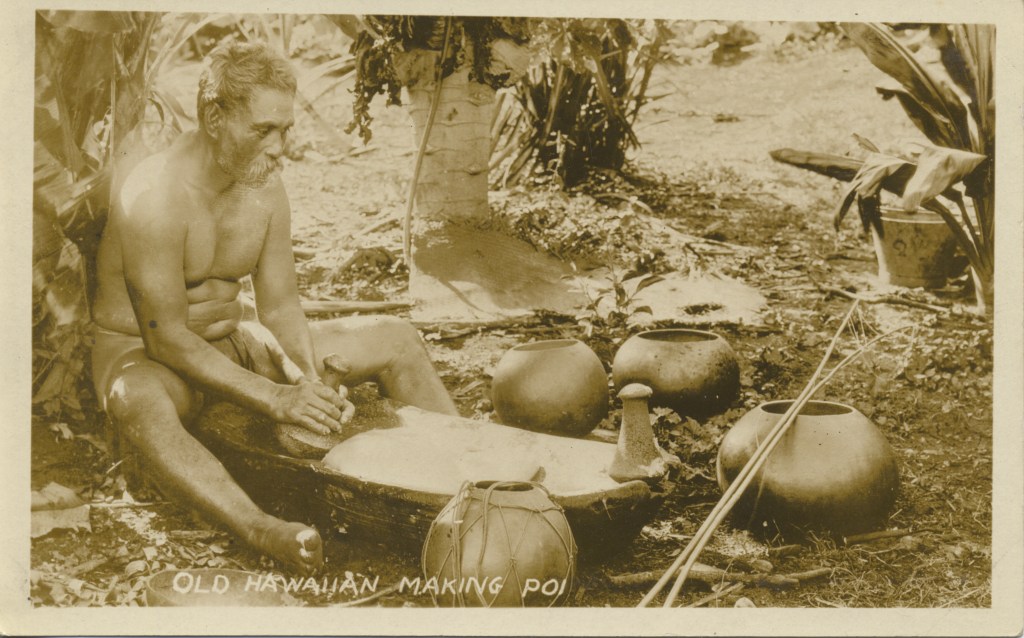
In ancient times times, Kalo was the primary food of Hawaiʻi, supplemented by other principal and traditional foods. Today, with the conveniences of imports and fast food chains, there’s not much demand or need for kalo or any traditional food. But there are those who still continue to perpetuate our cultural practices and the primal connection to Hāloa lives through them.
“He Aliʻi Ka ʻĀina, He Kauā ke kanaka”
The land is a chief, humans are its servants.
The land has no need for human, but humans need the land and work upon it for livelihood.
— Mary Kawena Pukuʻi, ʻŌlelo Noʻeau #531
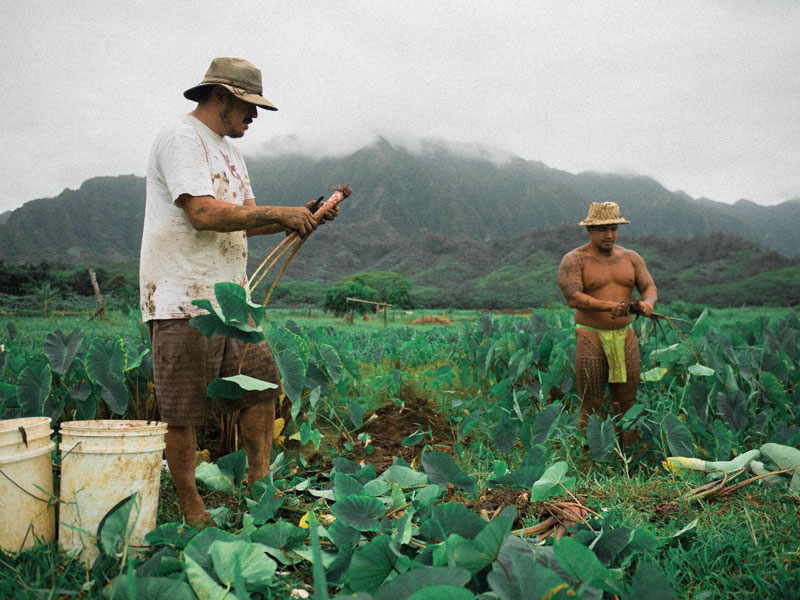
For generations and generations, my ancestors have sustained themselves by maintaining a healthy relationship with their environment. Since I was a little girl, my dad would teach me what his father taught him. He would take me fishing and diving for octopus, lobster, and all types of fish, picking ʻopihi (limpet), and always, always, cleaning the kalo patch. It has become a responsibility for my family to go to our family land, called Paeloko, throughout the week to clean the irrigation ditch, clear weeds, water plants, and pull/clean the kalo patches. By spending so much time ensuring that all plants are growing healthy and equipment like fishing tools are clean, you learn to truly appreciate the outcome. That is probably why my favorite thing to eat is fish and poi (with a little bit of furikake). I am not a real picky eater and I will try whatever you give me. In the future, I would love to try other cultures traditional foods like bird nest soup from china or Caponata Di Verdure from Sicily, those places also are where my genealogy takes me. I am not the best cook but I am learning. During my time here, I want to learn different customs of cooking so I can take it back home and share with my family.
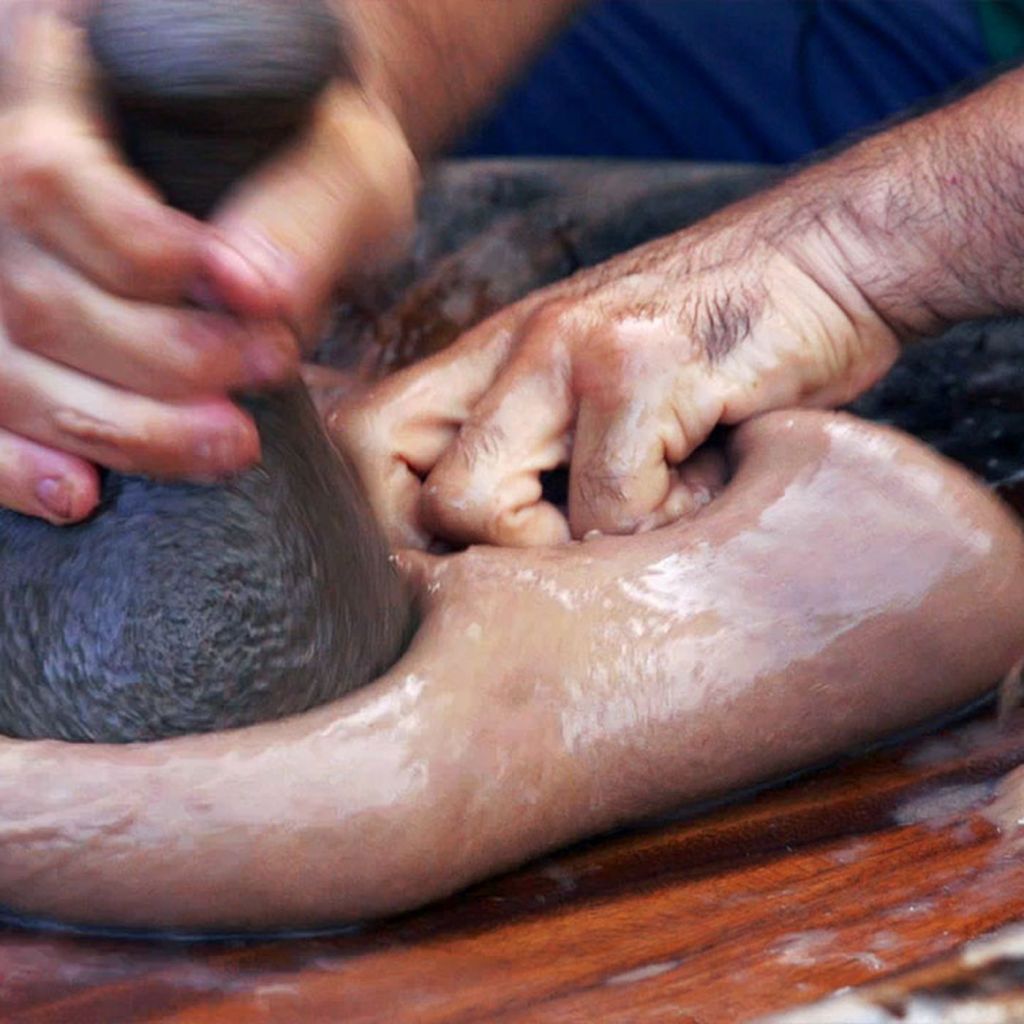
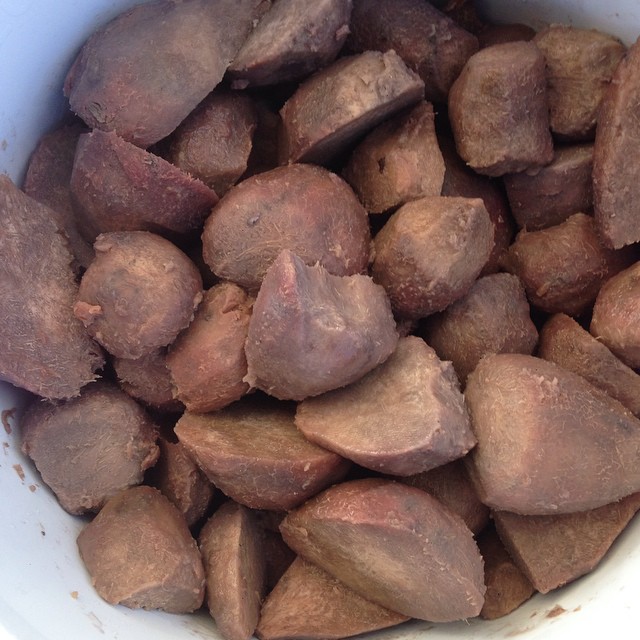
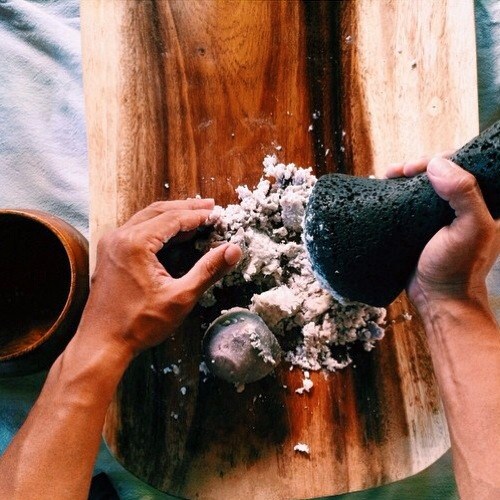
At times when I can’t think clearly, stress too hard, or get caught up in being really busy, I feel something within me, pulling me to get my hands in the dirt and feet in the water. Being on the land is a form of therapy for me. It is a part of me. I am passionate about unearthing and continuing traditional practices and fighting for environmental rights, because it’s my responsibility to care for my older sibling (Hāloa), my elders, and my mother (Papa). This is where I come from. The water, the land, the air, and the people, all that is essential for life, are the things that ground me into who I am today. My roots stretch far…all the way to the beginning of Papa and Wākea.
 kaiusrootz