– A Look at Slow Food –
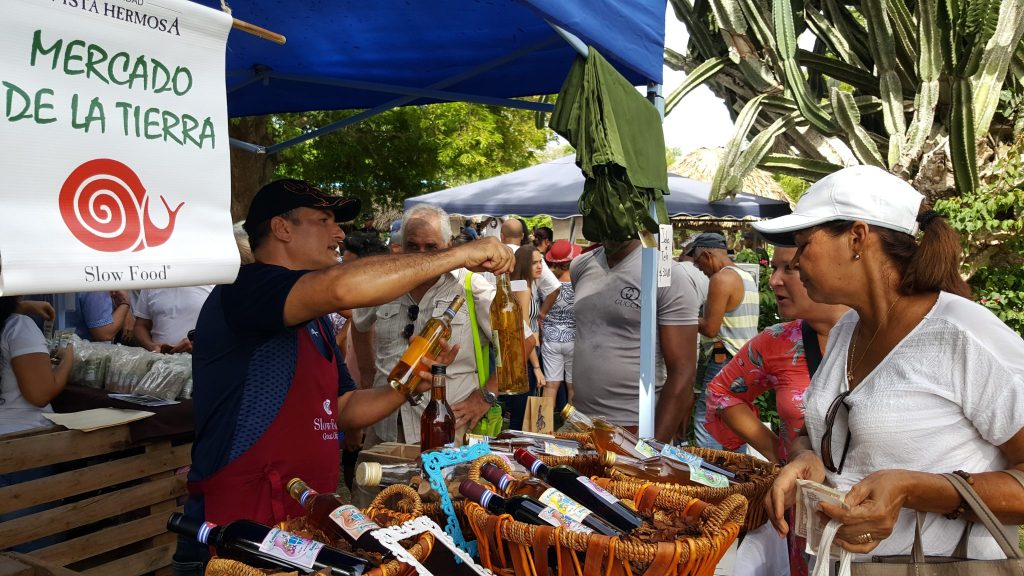
Everyone knows the childhood fable of the tortoise and the hare. Now switch up the story; in this case, the tortoise is a red snail and the hare is the accelerating impacts of globalization and the fast-food industry. This snail is the face of a worldwide organization called Slow Food. Slow food initially began in 1989 by Carlo Petrini to prevent the disappearance of local food cultures and counteract the rise of living a “fast” lifestyle. The Slow Food approach is based on promoting food that is good, clean and fair. The focus is on whole foods that are locally grown, dishes made with the health of the body and soul in mind, and meals that are appreciated when eaten. While these ideas about food are very much a part of the Italian culture, Slow Food is not confined to Italy. Today there are over 150,000 members of the movement in 160 countries.
Our world is more interconnected than ever before. This greater interconnectedness of cultures allows people to have a greater perspective about the world creating a beautiful global society but to an extent. Traditional practices that makeup one’s cultural identity are at the forefront of globalization’s detrimental consequences. The rate at which globalization is accelerating is deemed unstoppable, so how can we as individuals control it? Some people and organizations are taking matters into their own hands to find a balance between the past, present, and future of cultures starting with traditional appetites.
When I first began researching for this paper, I wanted to focus on the effects of globalization on traditional cuisines and cultural identity. My purpose was to prove that the consequences of globalization outweigh its benefits (and in some cases it does). But for the most part, what I discovered through my research is that because of globalization we have produced the advanced technology of today as well as our modern 21st-century cultural identity. I was in a predicament. I looked towards Dr. Campisi to assist me with the direction of my paper. He offered useful advice while also suggesting taking a look at this organization called Slow Food. I then found my argument which was that it is possible to balance the past, present, and future when it comes to traditional practices.
In the interconnected world we live in I believe we need programs like this to slow down the detrimental effects of globalization like climate change and homogenization. Being from Hawaii, traditional practices and cultural identity is very special to me. Through my history, I see how the loss of practice greatly impacts an entire people. I experience the revitalization of traditions every day, whether it be through dance, art, language, or food. So this project to me has opened a door of opportunities for me to explore ways of preserving my traditions. Slow food exists as an example for communities throughout the world to gather and begin working on what’s important. I fully support Slow food in its efforts of supporting small businesses, local culture, biodiversity, and traditional practices. Slow food is the future of the traditional cuisine through its efforts of preserving traditional practices in the inevitability of globalization. Now, looking back at the childhood fable, who won the race?
 kaiusrootz