-Water is Life-
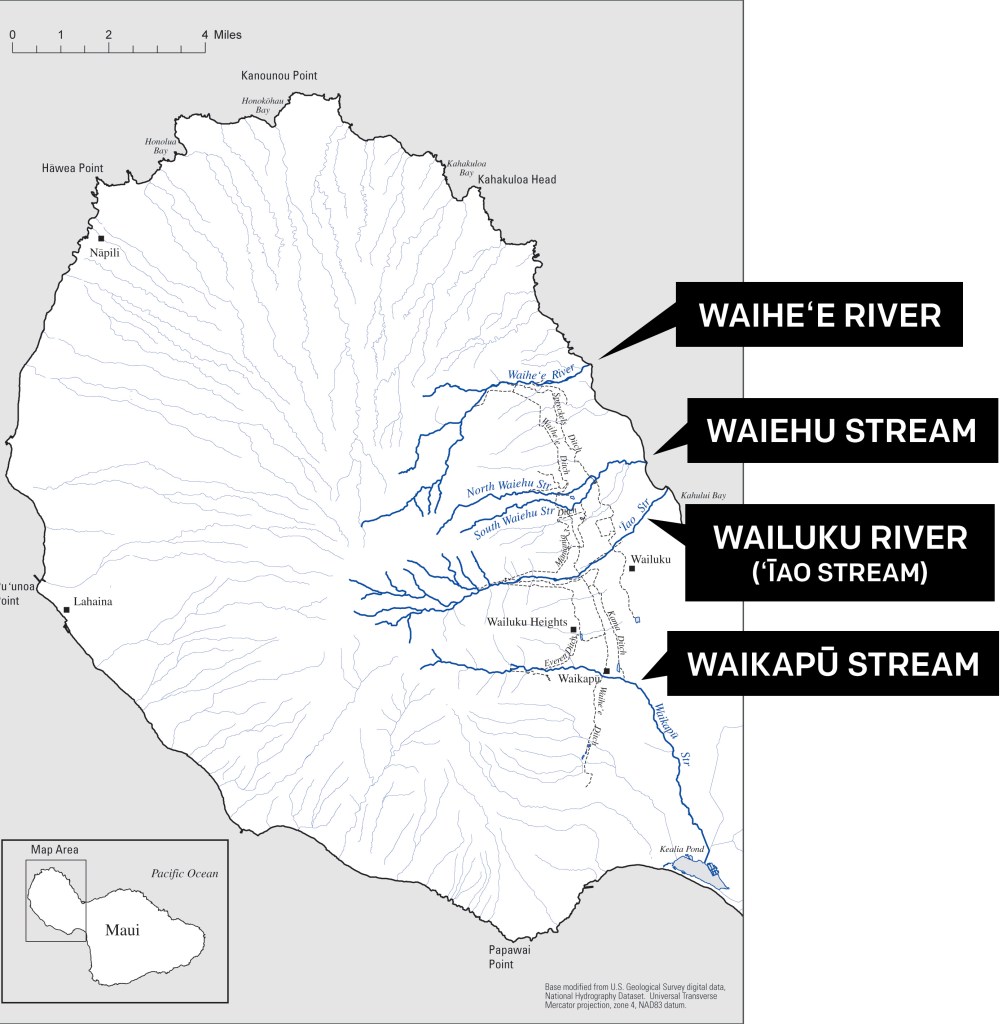
In central Maui, a system of freshwater streams that sustained thriving Hawaiian communities since time immemorial is all dried up. Known as Nā Wai `Ehā or “The Four Great Waters,” these streams have been diverted for more than a century to irrigate sugar plantations. Now, on their sloping path from the mountains to the Pacific Ocean, parched earth is mostly what remains of these vital waterways for much of the year.
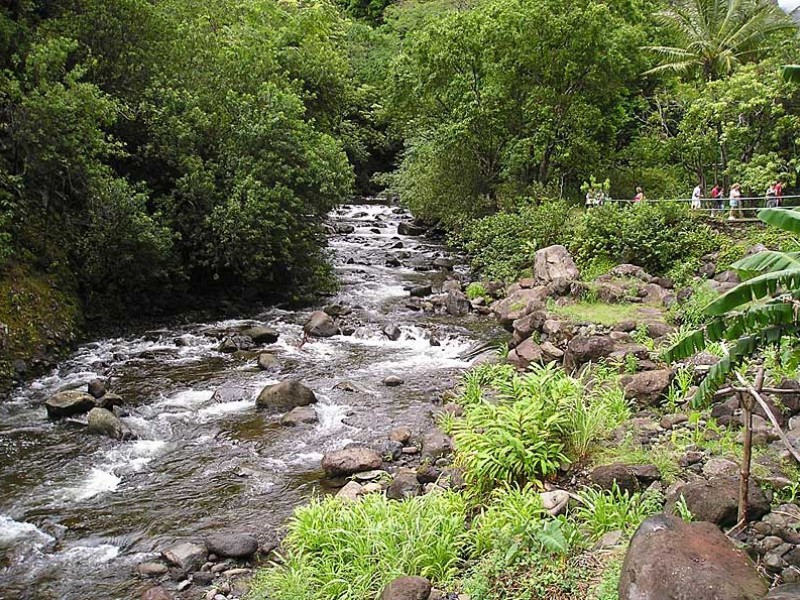
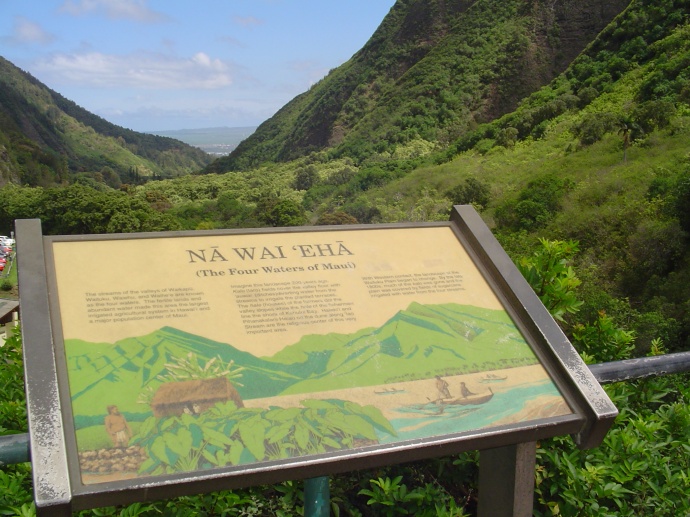
One might assume from the dry state of Nā Wai `Ehā that sugar cultivation is still a thriving industry on Maui. But it’s not. Over the past decade, the major water diverter—Wailuku Sugar Company—stopped growing sugarcane and began selling off the plantation to private developers. Yet it continues to drain the streams like before.
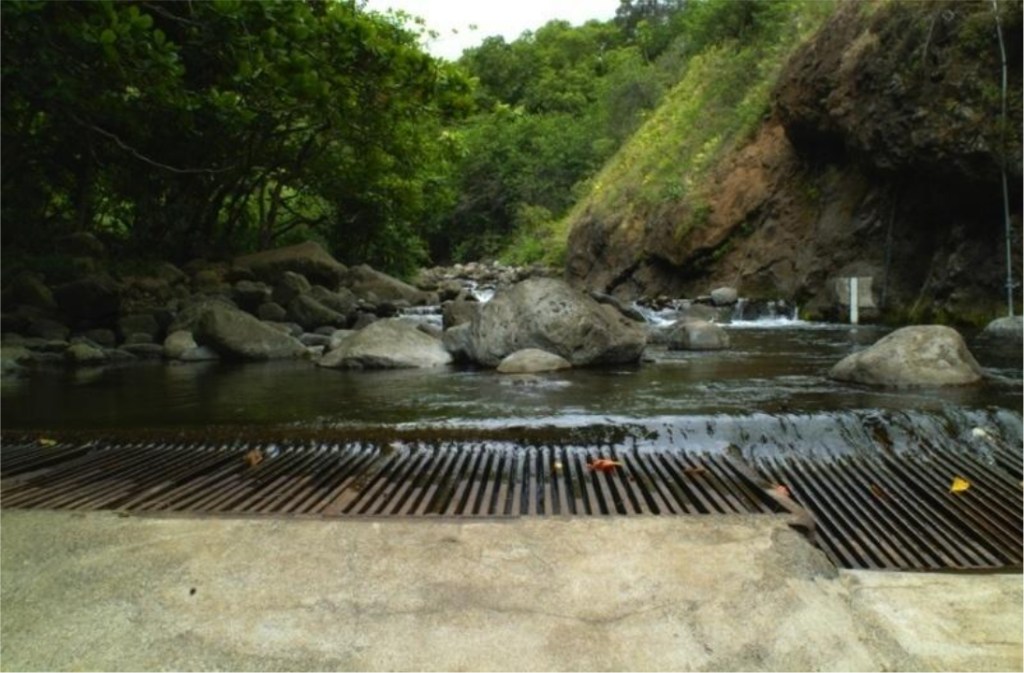
Why? Wailuku Sugar Company has reinvented itself as Wailuku Water Company. It maintains its water diversions to turn a profit by selling that water to the private development projects built on the former plantation lands. Wailuku hoards the “surplus” that it hopes to sell to future developments by giving it in the meantime to Hawaiian Commercial & Sugar, which uses the water as a cheap alternative to its non-potable agricultural wells, or dumps it on sandy fields it wouldn’t otherwise farm. But the water isn’t the companies’ to sell or to waste.
Water in Hawai`i is a public trust resource, protected by the Hawaii Constitution for the benefit of all Hawai`i’s people. The state has a duty to protect and restore traditional and customary Hawaiian practices, ecological uses, recreation, scenic values, and many other public uses of flowing stream water. Protecting private water banking and profiteering is not one of the state’s responsibilities—restoring Nā Wai `Ehā is.
Nā Wai `Ehā streamflow helps recharge the groundwater supply that sustains more than half of Maui’s residents and visitors. Native stream animals, wetlands, estuaries, and nearshore fisheries need a continuous supply of freshwater in order to remain healthy and functional. Streams need flow to support swimming, fishing, nature study, and aesthetic enjoyment.
And local communities need cool, flowing stream water for traditional wetland kalo (taro) cultivation, the staple food of the traditional Native Hawaiian diet. At one time, Na Wai `Eha supported Maui’s political center and fed the largest continuous area of wetland kalo fields in the Hawaiian Islands.
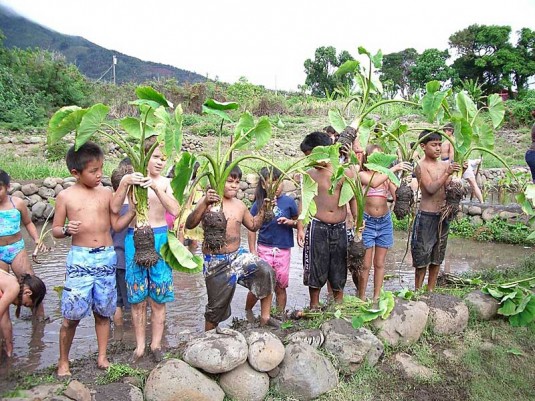
When companies began diverting streamflow for their sugar crops, Native Hawaiian communities suffered due to the restriction of kalocultivation, Community members continue to cultivate some kalo where they can, but the streams of Nā Wai `Ehā must be restored to revive this important cultural tradition to its full potential. Flowing streams will also provide habitat for native stream species and reinvigorate traditional and customary practices, including subsistence gathering.
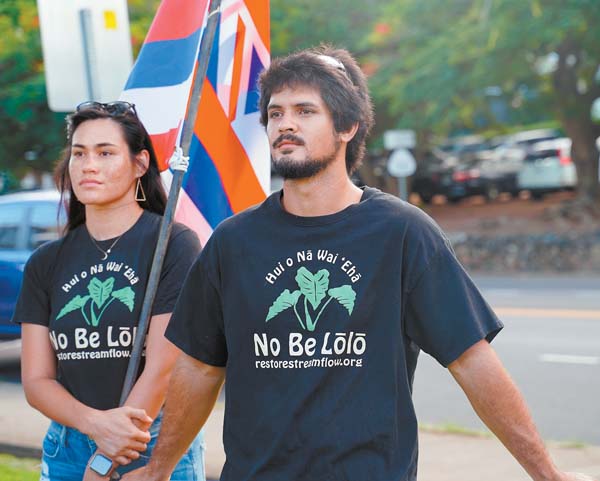
Restoring streamflow means restoring vitality to Nā Wai `Ehā and the Native Hawaiian and local communities that depend on The Four Great Waters that nourished Maui long before the sugar industry disrupted their ecological and cultural functions. As we say in Hawai`i, “No be lolo [foolish]: Restore streamflow!”
 kaiusrootz